
Alienating parents typically refuse to be accountable or engage in self-reflection. Instead, they project blame onto others, particularly the ‘target’ parent, as well as anyone else who triggers their unhealed trauma. Self-reflection can be deeply uncomfortable. We all tend to bury stuff we can’t deal with at the time.
Bruce Lipton, a renowned cellular biologist and author, has shed light on the impact of early programming on our subconscious minds. According to Lipton, approximately 70% of our subconscious programming consists of negative or disempowering beliefs and patterns, many of which are acquired before we’re 7 years old. This programming, often rooted in transgenerational trauma, shapes our perceptions and behaviours throughout life. Shocking, isn’t it? But whatever it is we’ve picked up – inherited programming that’s not even true about ourselves, but merely other people’s beliefs and prejudices or ‘issues’ passed down to us – we need to heal from so that we also don’t want to download any that onto our children.
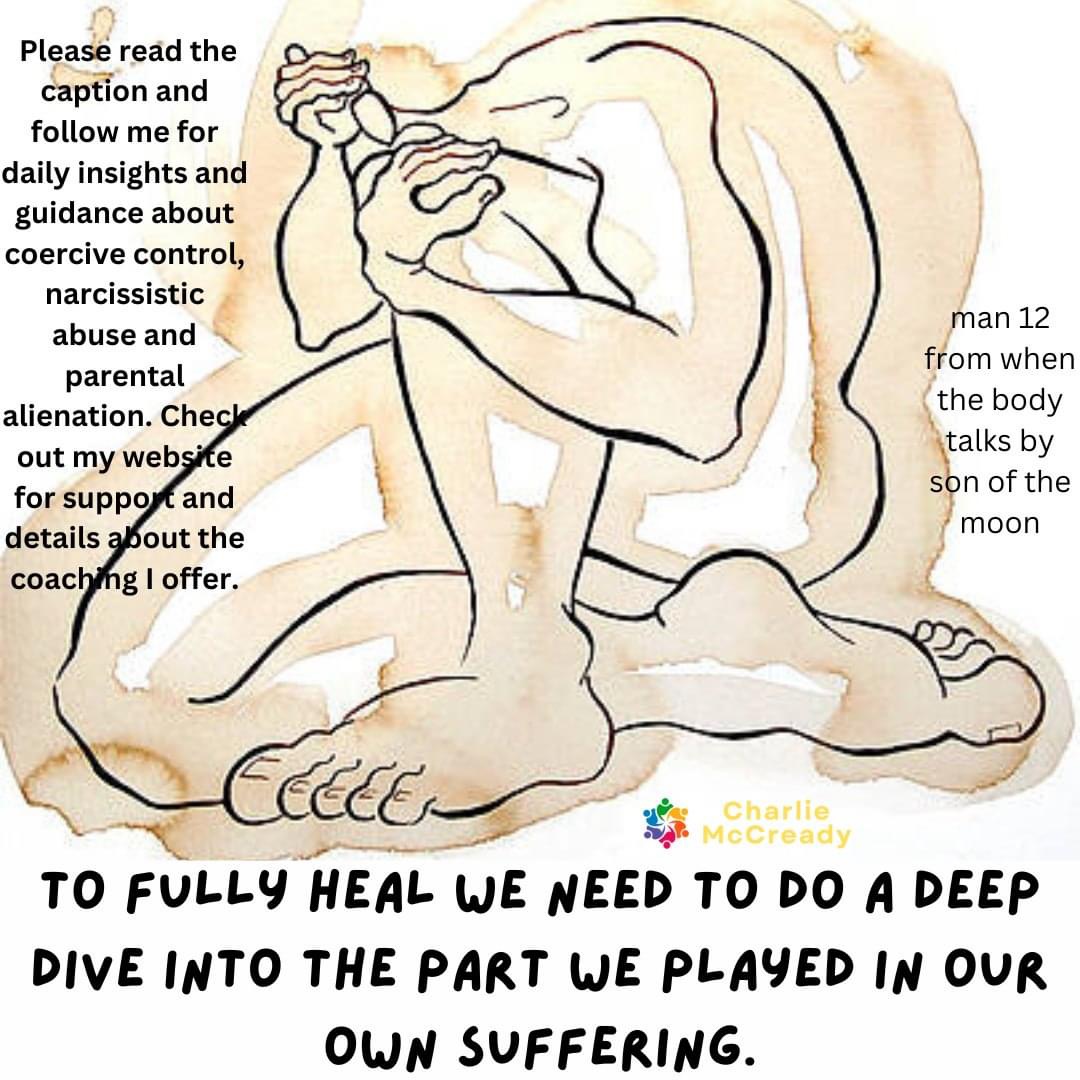
Therefore, moments of personal struggle, such as during a high-conflict divorce, present an opportunity for deep introspection and growth. It is like work. It’s not a walk in the park. But if we can do that deep dive and find out what it was that led us into an abusive relationship, or why we didn’t put up better boundaries, it can help us understand/accept where we are now. Acceptance is not easy to achieve, but it’s a great step towards healing and creating healthier, happier, more fulfilling lives, even despite adversities.
#charliemccready
#parentalalienationcoach
#parentalalienation
#FamilyCourt
#fathersrights
#mothersrights
#parentalalienationawareness
#childcustody
#healingjourney
#divorce
#selfcare
#alienatedparent

 GreatCosmicMothersUnite