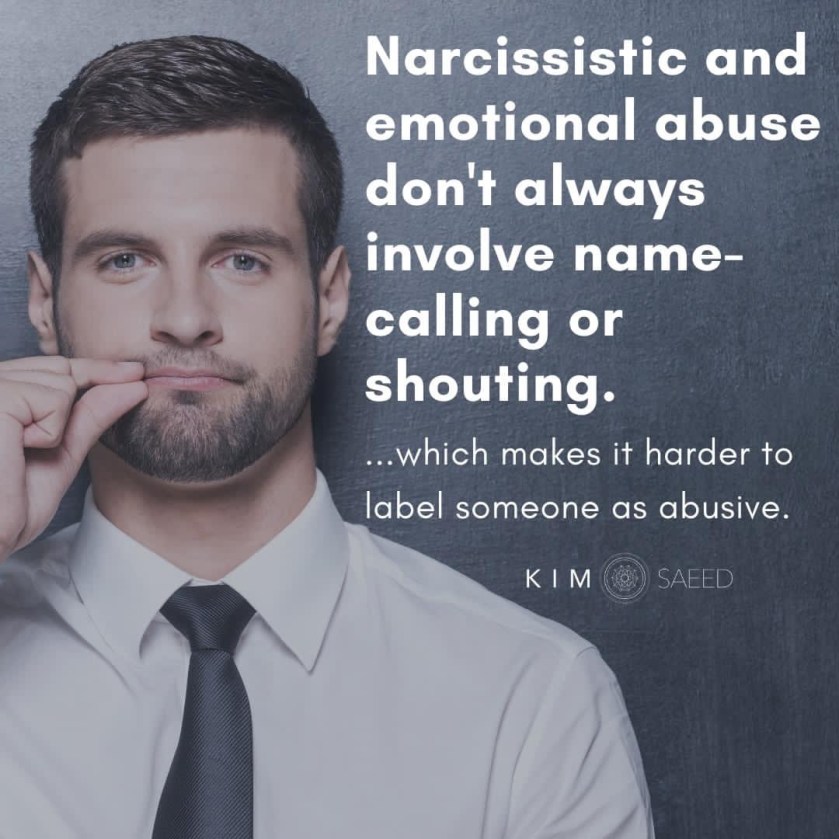
I’ve worked with many wonderful people who weren’t sure they were being subjected to narcissistic or emotional abuse because the person who was hurting them didn’t call them names or fly into narcissistic rages.
This is one of the traits of covert or “closet” narcissists.
I once knew a cerebral narcissist who was averse to shouting, yet he was very practiced at causing emotional pain in other ways.
I know it’s hard to come to acceptance that someone you care about and love is narcissistic, or even a full-blown narcissist. This is partly due to having formed a trauma bond with them. Much like Stockholm Syndrome, targets of narcissistic abuse develop feelings of trust or affection towards their abuser. This is a survival mechanism.
The main differences between these two phenomena are that with narcissistic abuse, you experience the same feelings as someone in a hostage situation…only instead of a stranger, it’s someone you know and love. And unlike a hostage situation consisting of a locked door or secret holding space, the prison is mostly in your own mind (owing, of course, to long-term manipulation and gaslighting).
There are many ways narcissists implement and engage in emotional and narcissistic abuse. Listen to your gut. They may not meet every single criterion on whatever checklists you’ve seen, but it’s important to keep in mind that it only takes one pathological trait for a narcissist to destroy another person’s life.
#stockholmsyndrome #narcissisticabuse #toxicrelationships