

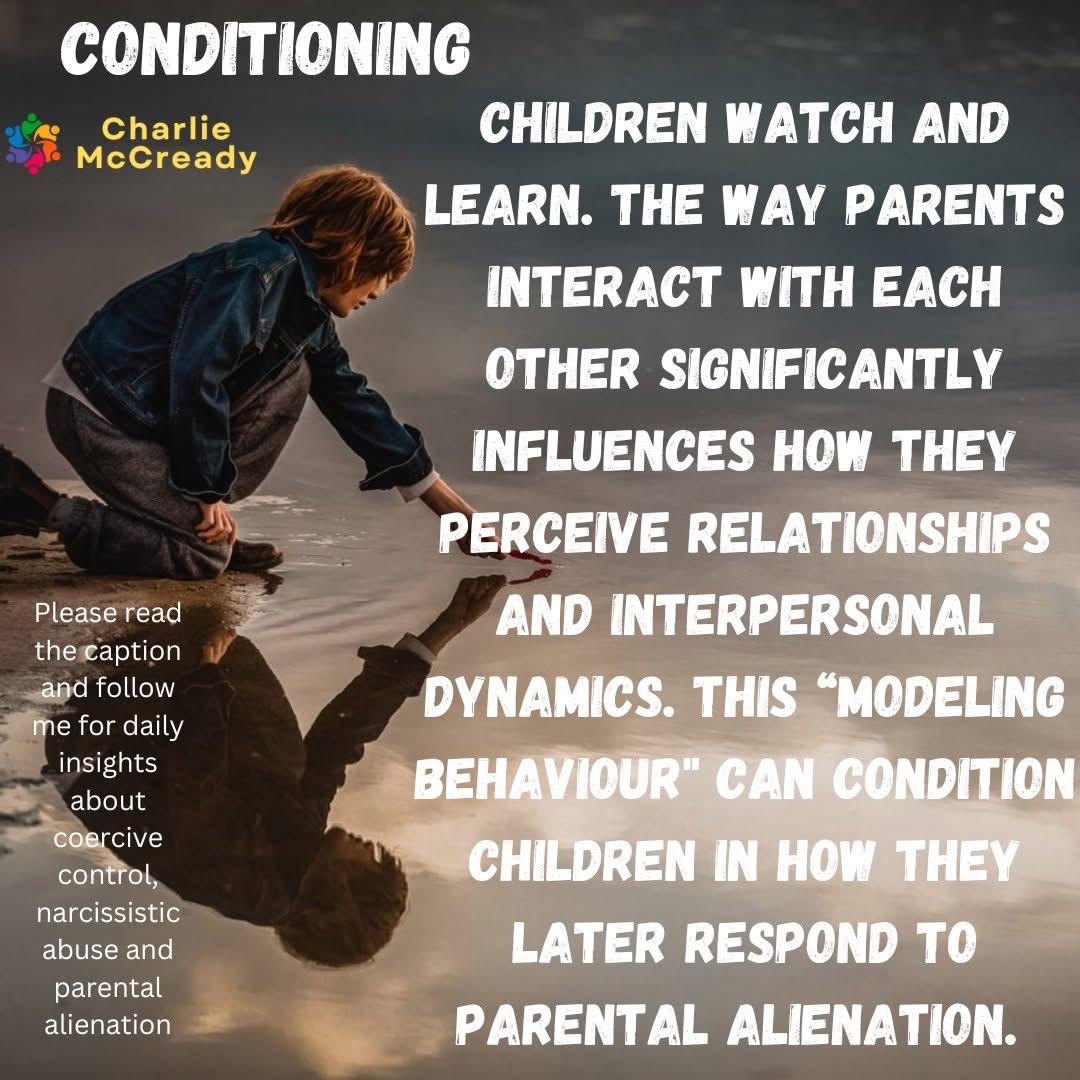
Children are like sponges, absorbing not only information but also behaviours exhibited by the adults around them. The way parents interact with each other significantly influences how children perceive relationships and interpersonal dynamics. This subtle process, known as “Modelling Behaviour,” lays the groundwork for how children may later respond to challenges like parental alienation.
Children are incredibly perceptive observers of their parents’ actions and interactions. As they witness how adults communicate, resolve conflicts, and treat one another, they internalise these behaviours as normal or acceptable. Parents are role models, demonstrating how their children should engage in relationships, express emotions, and handle disagreements. When one parent engages in negative behaviours like badmouthing, denigrating, or criticising the other, children unconsciously learn that these behaviours are acceptable and permissible, and in the case of alienating behaviours, the child may be encouraged and rewarded for emulating them.
When parents consciously exhibit kindness, respect, and empathy toward each other, they create a foundation for their children to build upon. Children growing up in an environment where healthy communication and conflict resolution are the norm are more likely to carry these positive traits into their own relationships as they mature. But as an alienated parent, remember that your disposition and actions, even from afar (children are sponges; they watch and pick up on things), can guide your child’s emotional growth and cultivate positive relationships throughout their life.
#charliemccready
#parentalalienationcoach
#childrensrights
#fathersrights
#mothersrights

 GreatCosmicMothersUnite