

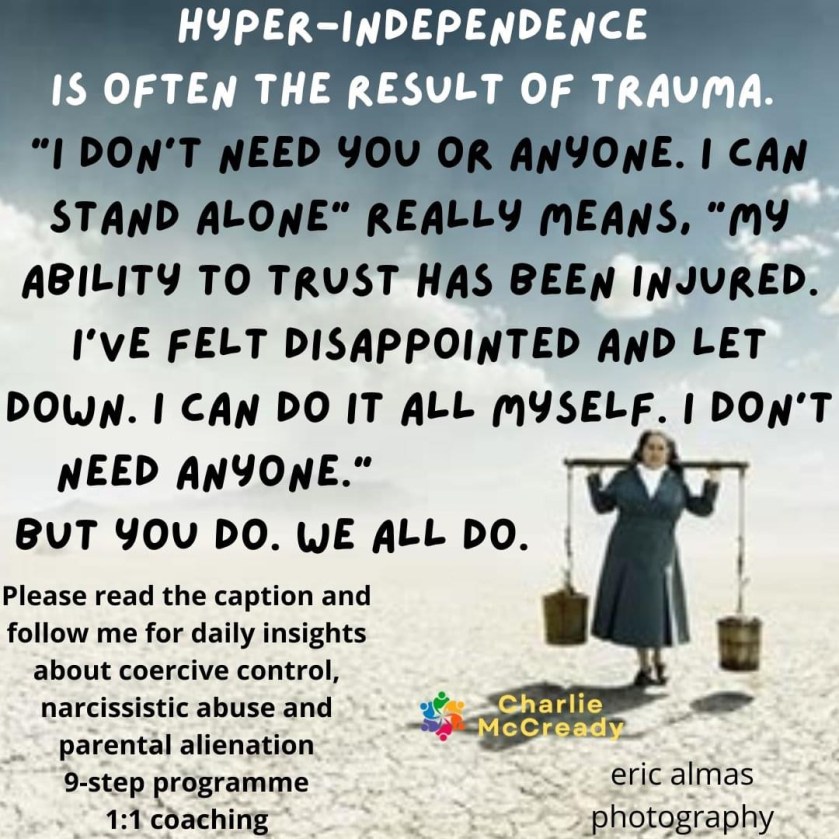
Our alienated child needs others too. They need both loving/loved parents in their life. If a person has suffered emotional damage from abandonment, betrayal or broken trust, hyper-independence might be evidenced. The highly capable, independent and tough-skinned approach. The defensiveness. The need to not appear weak, vulnerable or in need of help. For the alienated child, they feel they can’t depend on either parent. One has behaved as a child, selfishly and belligerently (not to mention abusively), and the ‘target’ parent has been rejected as a result. To appease the alienating/aligned parent, the child has denied themselves a closer relationship (or any kind of relationship) with the parent who would give them unconditional love, emotional support and protection. The alienated child has parented the alienating parent and can be prone (sometimes by a trigger that takes them back to the root of the trauma) to feeling now that nobody cares about them. It is about trust. Who can they trust if the person they trusted the most failed them so badly? The child/hyper-independent person must learn to trust the rejected parent, putting aside all their sense of guilt and shame and confusion. It is hard for them to learn to be vulnerable and trusting. But it can be done, and it is an incredibly powerful and healing step forwards when they do this. When we all do this.
#charliemccready
#parentalalienationcoach
#parentalalienation
#divorcesupport
#childcustody
#FamilyCourt
#coercivecontrol
#childpsychologicalabuse
#hyperindependence

 GreatCosmicMothersUnite