

Narcissistic Personality Disorder (NPD) is a mental health condition characterised by a pervasive pattern of grandiosity, a constant need for admiration, and a lack of empathy for others. People with NPD often have an inflated sense of self-importance and may exaggerate their achievements or talents. They may also display arrogant or haughty behaviours, believing themselves superior to others. In the context of parenting, and specifically ‘parental alienation’, narcissistic traits can significantly impact both the parent-child relationship and the family dynamic as a whole.
Here’s how these traits may manifest in an alienating parent:
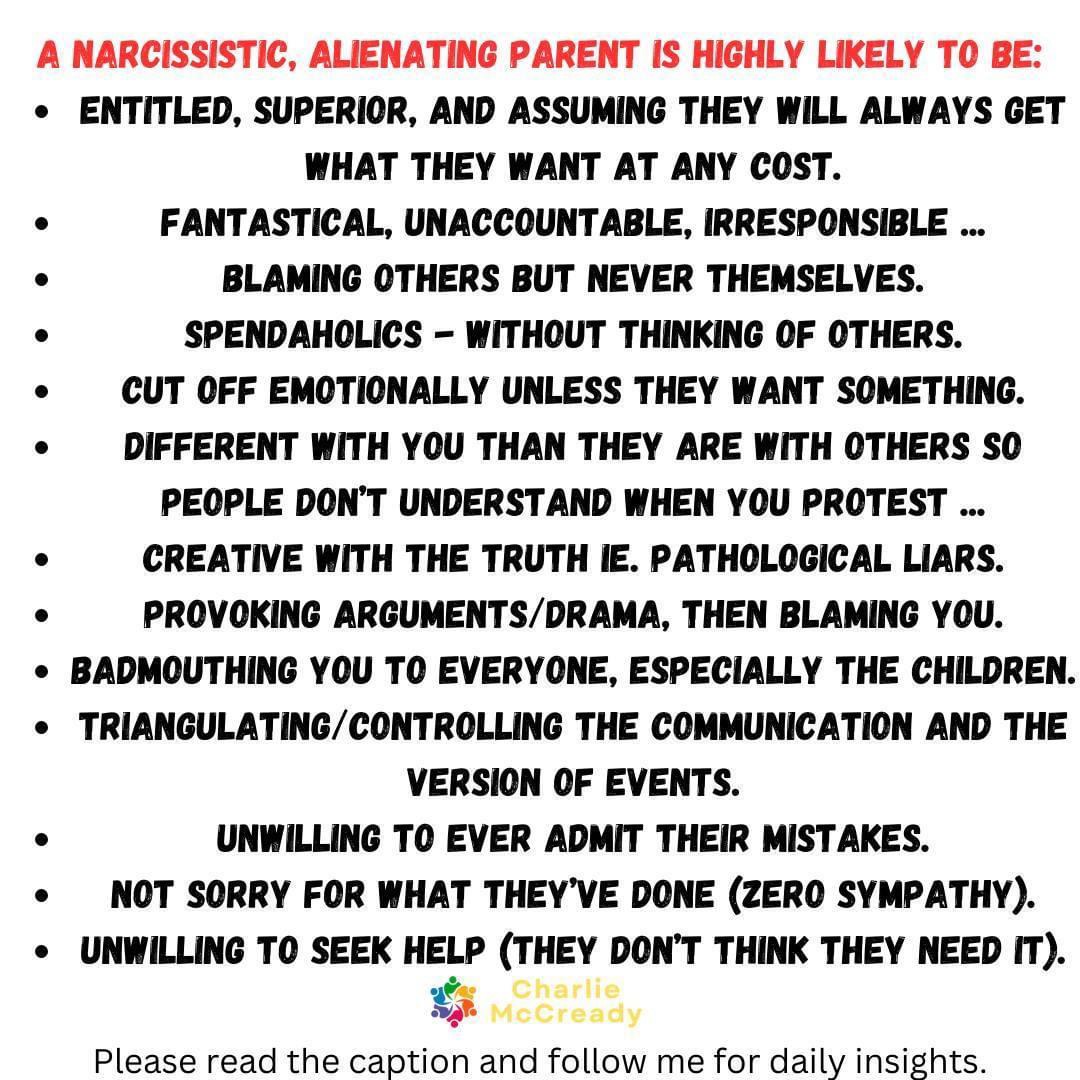
Grandiosity and Entitlement: An alienating parent with NPD may believe they are the only parent capable of meeting the child’s needs or providing love and support. They may feel entitled to the child’s affection and loyalty, viewing themselves superior to the other parent. An alienating parent may denigrate or belittle the other parent in front of the child, attempting to diminish their importance and elevate their own status.
Lack of Empathy: People with NPD often struggle to empathise with others’ feelings and experiences. An alienating parent may disregard the child’s emotional well-being and prioritise their own desires, using manipulation or coercion to control the child’s thoughts and actions.
Manipulative Behaviour: Narcissistic people are skilled manipulators. An alienating parent may use many tactics (mentioned in many of my posts) and employ these strategies to undermine the child’s relationship with the other parent, creating false narratives to justify their actions.
Need for Admiration: Alienating parents with NPD may seek constant validation and admiration from their children, expecting unwavering loyalty and devotion. They may become enraged or resentful if the child shows affection or allegiance to the other parent, viewing it as a threat to their own sense of self-worth.
Difficulty with Boundaries: People with NPD may struggle to respect boundaries or recognise the autonomy of others. An alienating parent will typically disregard the child’s need for a healthy relationship with both parents, monopolising the child’s time and attention to fulfill their own needs.
In summary, narcissistic traits can significantly influence the behaviour of an alienating parent, leading them to prioritise their own desires and manipulate the child’s perceptions to maintain control. If I can help you, beyond my posts, with my 9-step programme or coaching, please reach out.

 GreatCosmicMothersUnite